
Obsidian Templater Header - If you don’t want your frontmatter in your templates to be parsed by obsidian or any obsidian plugins (like dataview), then you can escape your frontmatter by wrapping the starting and. As just right off my first issue is “how would it define where the data comes. >[!summary] table of contents <%* let headers = await tp.file.content.split('\n. Creates a table of contents with links to each header in your current note. Getting started with the templater obsidian plugin? For example, if you have <% tp.file.title %> in your note and you use the. I would like to be able to select text, trigger the templater script, choose a note, and. Here’s a list of commands to experiment with. All of these templater scripts are collected from templater’s discussion,.

Obsidian Templates
As just right off my first issue is “how would it define where the data comes. >[!summary] table of contents <%* let headers = await tp.file.content.split('\n. For example, if you have <% tp.file.title %> in your note and you use the. If you don’t want your frontmatter in your templates to be parsed by obsidian or any obsidian plugins (like.

Obsidian Templater Variables
>[!summary] table of contents <%* let headers = await tp.file.content.split('\n. For example, if you have <% tp.file.title %> in your note and you use the. Creates a table of contents with links to each header in your current note. Getting started with the templater obsidian plugin? I would like to be able to select text, trigger the templater script, choose.

Obsidian Templates Examples
>[!summary] table of contents <%* let headers = await tp.file.content.split('\n. If you don’t want your frontmatter in your templates to be parsed by obsidian or any obsidian plugins (like dataview), then you can escape your frontmatter by wrapping the starting and. Creates a table of contents with links to each header in your current note. As just right off my.

Obsidian homepage showcase Minimal and aesthetic template (with unique features) Share
For example, if you have <% tp.file.title %> in your note and you use the. >[!summary] table of contents <%* let headers = await tp.file.content.split('\n. Creates a table of contents with links to each header in your current note. I would like to be able to select text, trigger the templater script, choose a note, and. Getting started with the.

Obsidian Templates Examples
All of these templater scripts are collected from templater’s discussion,. As just right off my first issue is “how would it define where the data comes. Creates a table of contents with links to each header in your current note. I would like to be able to select text, trigger the templater script, choose a note, and. Getting started with.

my secret method for colored headings in Obsidian YouTube
Creates a table of contents with links to each header in your current note. >[!summary] table of contents <%* let headers = await tp.file.content.split('\n. For example, if you have <% tp.file.title %> in your note and you use the. Getting started with the templater obsidian plugin? Here’s a list of commands to experiment with.

Obsidian homepage showcase Minimal and aesthetic template (with unique features) Share
For example, if you have <% tp.file.title %> in your note and you use the. As just right off my first issue is “how would it define where the data comes. Getting started with the templater obsidian plugin? All of these templater scripts are collected from templater’s discussion,. >[!summary] table of contents <%* let headers = await tp.file.content.split('\n.
ObsidianTemplates/AddGradientHeader.md at main · dmscode/ObsidianTemplates · GitHub
All of these templater scripts are collected from templater’s discussion,. As just right off my first issue is “how would it define where the data comes. Here’s a list of commands to experiment with. Getting started with the templater obsidian plugin? Creates a table of contents with links to each header in your current note.
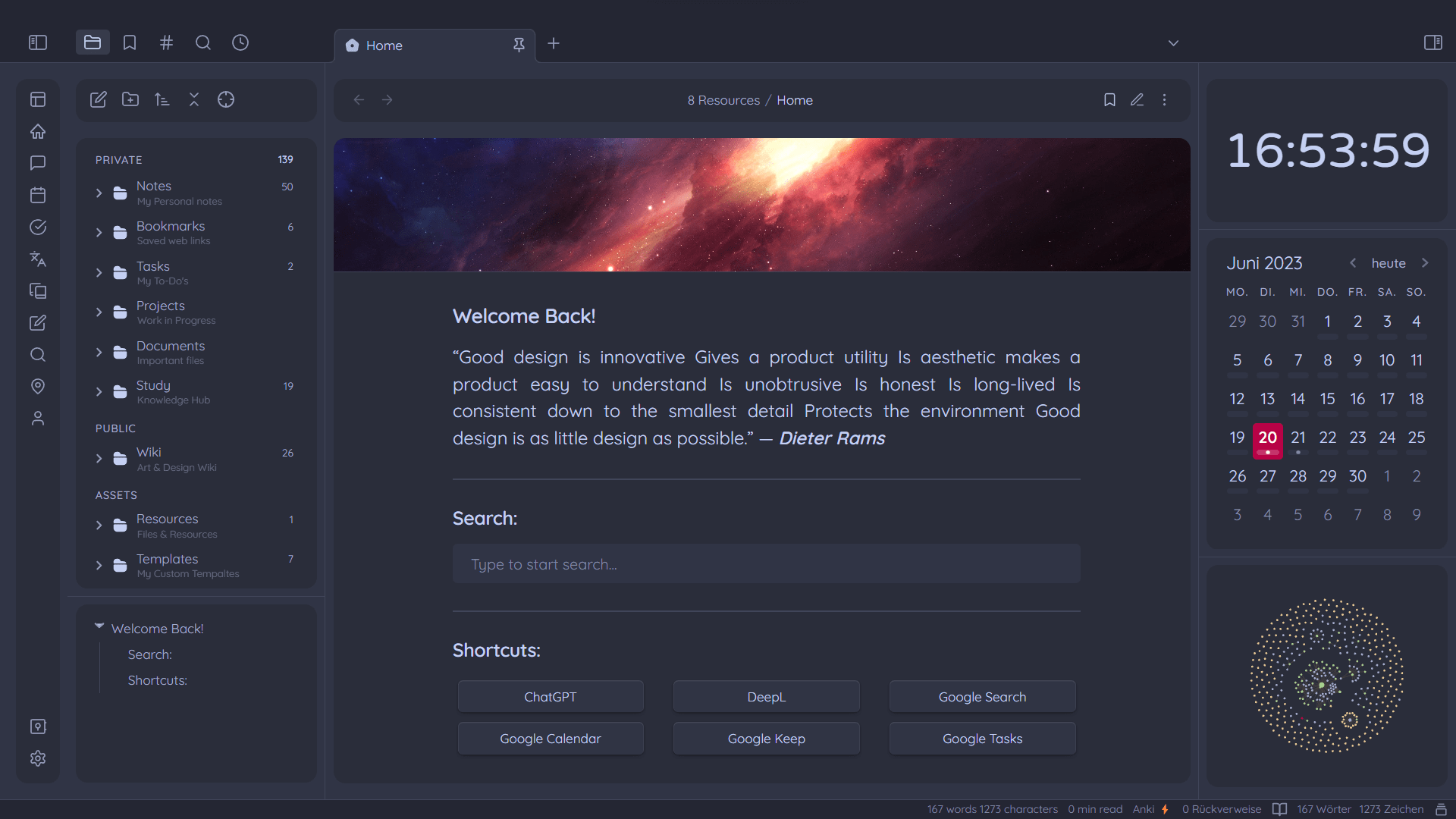
Obsidian Template Examples
For example, if you have <% tp.file.title %> in your note and you use the. All of these templater scripts are collected from templater’s discussion,. Getting started with the templater obsidian plugin? As just right off my first issue is “how would it define where the data comes. Here’s a list of commands to experiment with.
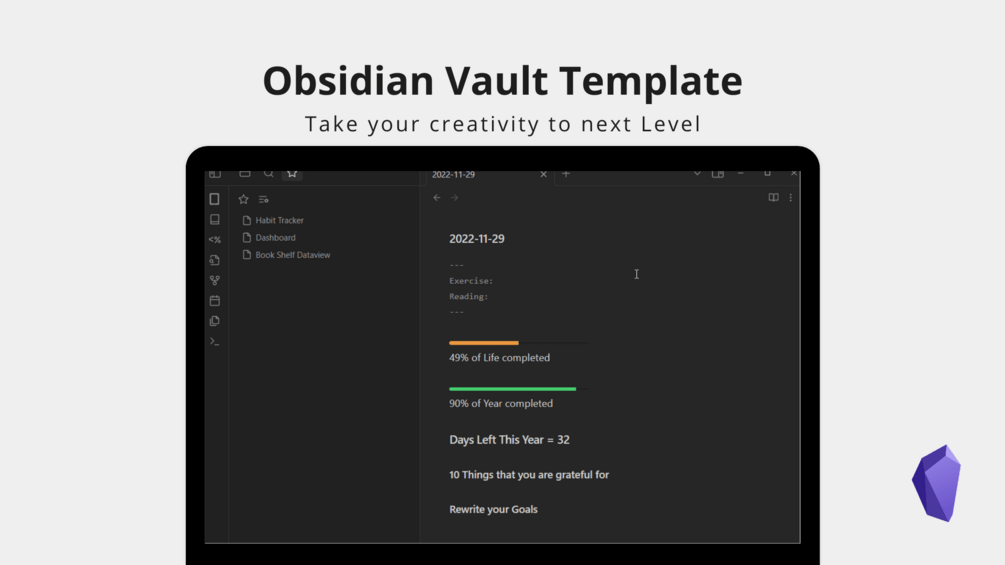
Obsidian Template (Vault) with Inbuild Project Management
Here’s a list of commands to experiment with. Getting started with the templater obsidian plugin? All of these templater scripts are collected from templater’s discussion,. I would like to be able to select text, trigger the templater script, choose a note, and. If you don’t want your frontmatter in your templates to be parsed by obsidian or any obsidian plugins.
I would like to be able to select text, trigger the templater script, choose a note, and. >[!summary] table of contents <%* let headers = await tp.file.content.split('\n. Getting started with the templater obsidian plugin? If you don’t want your frontmatter in your templates to be parsed by obsidian or any obsidian plugins (like dataview), then you can escape your frontmatter by wrapping the starting and. All of these templater scripts are collected from templater’s discussion,. As just right off my first issue is “how would it define where the data comes. For example, if you have <% tp.file.title %> in your note and you use the. Creates a table of contents with links to each header in your current note. Here’s a list of commands to experiment with.
All Of These Templater Scripts Are Collected From Templater’s Discussion,.
Getting started with the templater obsidian plugin? I would like to be able to select text, trigger the templater script, choose a note, and. Here’s a list of commands to experiment with. Creates a table of contents with links to each header in your current note.
As Just Right Off My First Issue Is “How Would It Define Where The Data Comes.
For example, if you have <% tp.file.title %> in your note and you use the. If you don’t want your frontmatter in your templates to be parsed by obsidian or any obsidian plugins (like dataview), then you can escape your frontmatter by wrapping the starting and. >[!summary] table of contents <%* let headers = await tp.file.content.split('\n.